


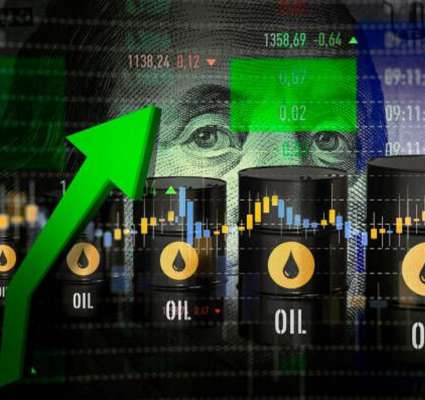





World newsLatin America

Overview
Latin America remains a region where political ambition frequently collides with structural constraints, producing both outsized opportunities and latent risks for investors and asset holders. Apparent political stability often masks deeper shifts in elite coalitions, informal power networks, and financial alignments. In this environment, the illusion of control can prove more costly than any single market shock.
Traditional elite-transition forecasts, often derived from media narratives or headline macroeconomic indicators, offer limited strategic value. Understanding real risk exposure in Latin America requires deeper analysis of influence channels that operate outside formal institutions and public discourse.
Підписуйтеcь на наш Telegram-канал Lenta.UA - ЄДИНІ незалежні новини про події в Україні та світі
Why Conventional Elite Forecasting Falls Short
Most mainstream analyses of elite change in Latin America rely on visible indicators: GDP growth, interest rates, election polling, and official policy statements. While useful, these metrics largely reflect outcomes, not drivers, of political and economic change.
What is frequently overlooked is the informal architecture of power—networks that shape decision-making long before changes become visible at the institutional level. By the time political realignments are reflected in public data, their implications for assets and operations have often already materialized.
Key Blind Spots in Standard Analysis
- Informal power networks
Real influence is often exercised by actors outside formal office, including business intermediaries, security elites, media stakeholders, and political financiers. - Financial flows behind political competition
Campaign financing, off-balance-sheet funding, and cross-border capital movements frequently signal future policy direction earlier than official platforms. - Security structures and non-transparent actors
Military, intelligence, and private security networks can play decisive roles in regime stability or transition, particularly in periods of social stress. - National interests beyond public narratives
Strategic agreements and elite bargains, rarely disclosed, often determine a country’s real trajectory more than public rhetoric.
Elite Change as a Risk Variable for Assets
Elite transformation in Latin America is rarely abrupt; it is typically gradual, negotiated, and opaque. However, its impact on assets can be sudden. Regulatory reversals, contract renegotiations, selective enforcement, and shifts in access to decision-makers often accompany changes in elite balance rather than formal changes of government.
For investors and corporations, elite change functions less as a political event and more as a structural risk variable affecting:
- asset security and enforceability of ownership rights,
- regulatory predictability,
- access to strategic sectors and infrastructure,
- reputational and compliance exposure in cross-border operations.
Strategic Implications for Asset Holders
A more resilient approach to Latin American exposure requires moving beyond reactive forecasting toward adaptive risk management:
- Early identification of informal realignments
Monitoring shifts in alliances among political, economic, and security elites can provide advance warning of regulatory or policy change. - Assessment of non-codified risk
Many of the most consequential risks—selective enforcement, informal pressure, elite bargaining—do not appear in legal or financial documentation. - Structural flexibility of assets
Ownership structures, jurisdictional layering, and operational footprints should be designed to absorb political and regulatory shocks. - Strategic stakeholder mapping
Understanding who influences outcomes—not merely who occupies formal positions—is essential for long-term operational continuity.
Latin America is not simply a geographic region; it is a dynamic power system in which each political move reshapes the balance of interests. Public discourse often serves as a distraction, while substantive decisions are made through informal channels long before they surface in official policy.
For asset holders and strategic investors, elite change should be treated not as a headline-driven political event, but as an ongoing process that directly affects risk, valuation, and long-term viability. Those who rely solely on public indicators will react late; those who integrate deeper political and elite analysis are better positioned to adapt before structural shifts become irreversible.
Kateryna Odarchenko
Senior International Analysis, Editor-at-Large
Читайте также: Davos 2026: From Polycrisis to Strategic Turbulence Imperatives for Asset Protection and Cross-Border Compliance
Читайте также: Kateryna Odarchenko Releases The Game of Campaigns — A Practical Guide to Winning Political Campaigns in the 21st Century
Евгений МедведевПоделиться:


Новости
Трамп разозлился на Папу Римского
10:10 13 апр 2026.
Выборы в Венгрии: посчитали 99% голосов
09:55 13 апр 2026.
США начинают морскую блокаду Ирана
09:30 13 апр 2026.
Оппозиционная «Тиса» получила большинство в парламенте Венгрии
09:15 13 апр 2026.
Почти 100 российских дронов атаковали Украину этой ночью
08:36 13 апр 2026.
В Укрэнерго определились с отключениями света в понедельник
05:45 13 апр 2026.
Орбан признал поражение на выборах и поздравил Мадяра
22:55 12 апр 2026.
Назван оригинальный способ улучшить сон ночью
22:00 12 апр 2026.
Венгры поставили рекорд явки на выборах
21:40 12 апр 2026.
Читайте также:
World news
Davos 2026: From Polycrisis to Strategic Turbulence Imperatives for Asset Protection and Cross-Border Compliance
12:45 26 янв 2026. 237
World news
Kateryna Odarchenko Releases The Game of Campaigns — A Practical Guide to Winning Political Campaigns in the 21st Century
12:13 20 авг 2025. 869
World news
Government Relations in Dubai: How Decision-Making Power Operates Beyond Formal Access
16:57 26 янв 2026. 296
World news
Latin America: Elite Transformation and Asset Risk Strategic Insights Beyond Conventional Forecasts
14:51 26 янв 2026. 241
World news
Washington meetings became a preparatory stage for the Munich Security Conference
10:54 18 фев 2025. 415
World news
Kateryna Odarchenko Invited to Prestigious Event Honoring Women Leaders
07:17 04 окт 2024. 1452
Самое читаемое


Наука и технологии
В мире появилась еще одна космическая держава – уже седьмая
23:55 21 июн 2022. 891016


Общество
На одном из пунктов пропуска с Польшей вводят ограничения – проехать смогут не все
23:25 21 июн 2022. 947660
Точка зрения


Фото Lenta.UA
 Топ-фото последствий массированных атак России на Украину
13:31 12 окт 2022. ТОП-10 удивительных фото животных
15:18 02 дек 2021. В КИЕВСКОМ НАЦИОНАЛЬНОМ ИСТОРИКО-МЕМОРИАЛЬНОМ ЗАПОВЕДНИКЕ БАБИЙ ЯР ПРОШЕЛ ДЕНЬ ПАМЯТИ ЖЕРТВ (ФОТОРЕПОРТАЖ)
10:28 30 сен 2021. Названы победители Drone Awards 2021
14:35 12 сен 2021. Смещенный праздник
10:20 01 сен 2021.
Видео Lenta.UA
 Мировые производители пшеницы в 1991–2024 годах – видео от Experts Club
14:40 15 окт 2025. НАТО подтверждает, что ракетные системы Patriot направляются в Украину
15:09 18 июл 2025. Эксперт проанализировал перспективы добычи полезных ископаемых в Украине после подписания соглашения с США
13:49 12 май 2025. Рух Опору ССО України — це ми, народ, що бореться за свободу
15:47 08 апр 2025. Эксперты проанализировали выборы в ключевых странах мира, которые должны состояться в 2025 году
11:40 23 фев 2025. Эксперты Atlantic Council и Experts Club обсудили будущую политику Дональда Трампа
18:06 20 янв 2025.


Опрос Lenta.UA
Спасибо! Ваше мнение учтено!
Как вы считаете, когда закончится война в Украине?

- Мир
- За рубежом
- За "поребриком"
- Зеленая планета
- World news
- Особое мнение
- Интервью
- Цитата
- Блоги
- Точка зрения
- Досье
- Культура
Использование материалов сайта разрешается только при условии ссылки на Lenta.UA (для интернет-изданий - гиперссылки, открытой для индексации).